


 Jan 21,2026
 By docstrail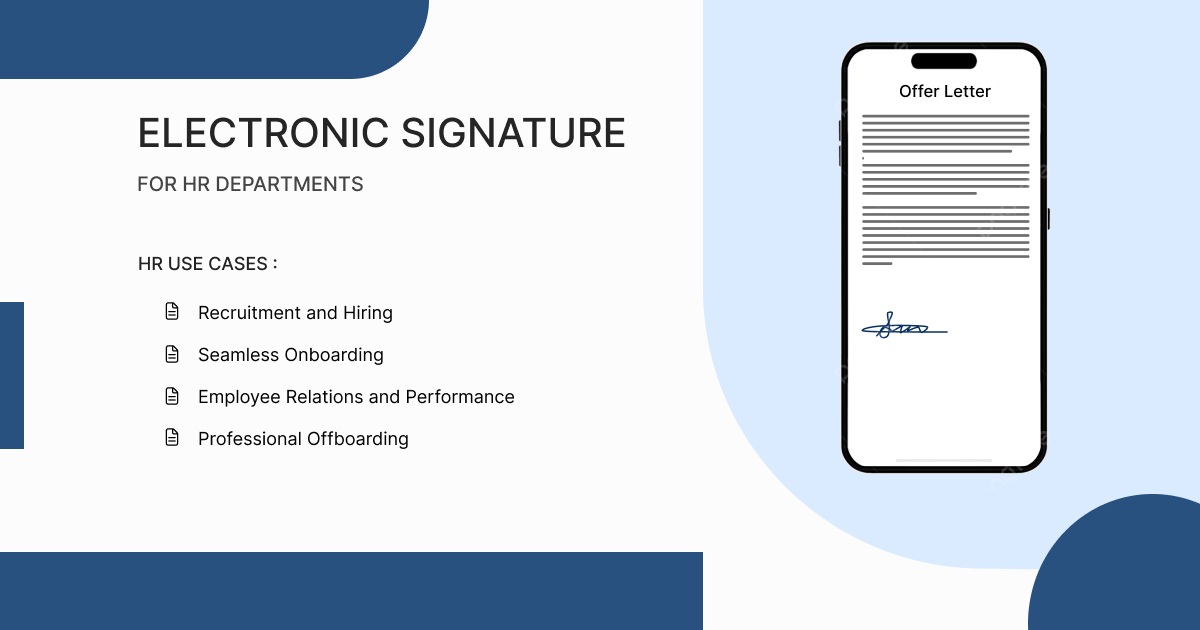
In the traditional world of Human Resources, the “paper trail” was more than just a metaphor it was a physical burden. HR managers of the past spent a significant portion of their week printing offer letters, scanning signed policies, and tracking down missing signatures via courier. In today’s fast-paced, remote-first business environment, that model is not just inefficient; it is a liability.
The transition to an electronic signature for human resources has moved beyond a simple tech upgrade. It is now the foundation of digital transformation. As we navigate the complexities of 2026, HR departments are no longer back-office admin hubs; they are strategic partners focused on the “Employee Experience” (EX). Implementing an electronic signature solution is the first step in signaling to new talent that your organization is modern, agile, and respectful of their time.
What Exactly is an Electronic Signature?
Before diving into the benefits, it’s crucial to understand the terminology. While often used interchangeably, there is a technical difference between an electronic signature and a Digital Signature.
- Electronic Signature: This is a broad category that represents a person’s intent to agree to the contents of a document. It can be as simple as a typed name, a digital image of a handwritten signature, or a click on an “I Accept” button.
- Digital Signature: This is a specific, highly secure type of electronic signature. It uses cryptographic technology to “hash” the document, ensuring that if even a single comma is changed after signing, the signature becomes invalid.
For most Human Resources tasks, a standard electronic signature is legally sufficient. However, for high-stakes executive contracts or international agreements, many e-signing services provide “Advanced” or “Qualified” signatures that offer higher levels of identity verification.
The Core Benefits: Why HR Needs This Now
Why are so many organizations rushing to adopt an esignature for hr department workflows? The data from 2025 and 2026 tells a compelling story of ROI and efficiency.
1) Speed and “Time-to-Hire”
In a competitive talent market, speed is your greatest ally. Statistics show that when using traditional paper methods, 65% of businesses report that obtaining physical signatures takes an entire workday or longer. Conversely, 79% of agreements sent via electronic signature are signed within 24 hours. When you send an offer letter that can be signed on a smartphone in minutes, you dramatically reduce the window for a candidate to be “poached” by a competitor.
2) Massive Cost Reduction
The “hidden” costs of paper are staggering. Between ink, paper, postage, and physical storage, the average cost of processing a single paper document ranges from $6 to $8. By switching to an electronic signature for human resources, that cost plummets to roughly $0.50 per document. For a mid-sized company, this can result in savings of up to $80 per employee annually.
3) Error-Free Onboarding
We’ve all experienced it: a new hire returns a 20-page onboarding packet, only for HR to realize they missed a signature on page 14. This triggers a frustrating cycle of re-scanning and re-sending. Modern e-signing services use “mandatory fields,” ensuring a document cannot be submitted until every required signature and date is filled out.
4) Tired of chasing missing signatures?
Don’t let paperwork slow down your talent acquisition. Switch to an esignature for hr department workflows and get your offer letters signed in minutes, not days.
[Sign up for 14 days free trial – No credit card required]
HR Use Cases Across the Employee Lifecycle
To truly understand the impact of an esignature for hr department, we must look at how it touches every stage of an employee’s journey.
Recruitment and Hiring
The first interaction a candidate has with your “official” brand is often the offer letter. Using an electronic signature allows you to send:
- Offer Letters and Employment Contracts
- Non-Disclosure Agreements (NDAs)
- Background Check Authorizations
Seamless Onboarding
The first day should be about culture, not paperwork. With digital workflows, a new hire can complete their entire “new hire packet” before they even step into the office (or log into the VPN). This includes:
- Tax forms (W-4s) and I-9 authorizations
- Direct deposit setups
- Employee handbook acknowledgments
Employee Relations and Performance
Ongoing compliance is much easier to manage when it’s digital. HR can send out company-wide policy updates (like a new Remote Work Policy) and track in real-time who has signed and who needs a reminder.
- Performance Reviews
- Promotion and Compensation Change letters
- Disciplinary notices and grievance records
Professional Offboarding
When an employee leaves, the process should be as smooth as their arrival. Digital signatures ensure that resignation letters, severance agreements, and exit interview acknowledgments are handled with high security and stored in a central, searchable database.
Security, Compliance and the Audit Trail
One of the most common myths is that paper is “safer.” In reality, paper files can be lost, misfiled, or accessed by anyone with a key to a filing cabinet. An electronic signature for human resources offers a level of security paper simply cannot match.
The Audit Trail
Every document signed through professional e-signing services comes with a digital audit log. This log captures:
- The IP address of the signer.
- The exact timestamp of when the document was opened, viewed, and signed.
- The email address or phone number used for authentication.
Global Legal Validity
Whether you are operating under the ESIGN Act and UETA in the United States, or eIDAS in the European Union, electronic signatures are legally binding. These laws state that a signature cannot be denied legal effect solely because it is in electronic form.
Ready to Future-Proof Your HR Department?
Secure, compliant, and incredibly easy for candidates to use—our electronic signature for human resources is the tool your team has been waiting for. Take the first step toward a paperless office today.
[Sign up for 14 days free trial]
Overcoming Implementation Hurdles
Despite the benefits, moving to a digital system requires a change in mindset.
- The “Human” Element: Some long-term employees may be skeptical of “digital” security. The solution is transparency. Explain how the audit trail works and how it protects their data as much as the company’s.
- Integration is Key: An esignature for hr department works best when it isn’t a “silo.” Look for tools that integrate directly with your Applicant Tracking System (ATS) or HRIS (like Workday, BambooHR, or Salesforce). This ensures that once a document is signed, it is automatically saved to the employee’s profile without manual uploading.
Choosing the Right Partner: A Checklist
When evaluating e-signing services, don’t just look at the price. Consider these 2026-standard features:
- Mobile-First Experience: Can the candidate sign easily on an iPhone or Android?
- Multi-Factor Authentication (MFA): Does the tool offer SMS or biometric verification for sensitive documents?
- Custom Branding: Does the signing page look like your company, or the software provider?
- Automated Reminders: Can the system “nudge” signers automatically every 24 hours?
Also Read: Online Signature Generator vs Manual Signature: What’s Better in 2026?
Conclusion: Future-Proofing Your HR Department
The transition to an electronic signature for human resources is no longer a luxury—it is a baseline requirement for a functional, modern workplace. By eliminating the friction of paper, you free your HR team to focus on what really matters: culture, strategy, and people.
The “old way” of doing things is costly, slow, and prone to error. The “new way” is secure, instant, and environmentally sustainable.
Ready to transform your workflow? Most leading platforms allow you to test their features in a real-world environment before committing.
Sign up for 14 days free trail today and see how much time your Human Resources team can save in just two weeks.